How to Choose a Custom Home Builder in Los Angeles
A polished portfolio won't tell you whether a builder can handle your lot, your budget, or your permits. So, how do I choose a custom home builder in Los Angeles? Compare relevant completed custom home projects, credentials, itemized estimates, and contracts. Photos come last.
This guide covers what to check before you commit to the Design phase or the Build phase. Still in the Locate phase, shopping for land with your real estate team? Read it anyway. Half of these checks change which lot is worth buying.
Five Los Angeles Home Builders to Research
This shortlist names one company and four types of candidates. It's not a construction-quality ranking. Verify licensing, insurance, references, scope fit, and contract terms yourself, and give every builder the same project information so the answers are comparable.
One rule applies to all five. Confirm the builder has done new home construction (foundations, utilities, framing, inspections, final approvals) and isn't leaning on remodeling experience alone. Ground-up residential construction is a different job.
1. Preferred Home Builders (formerly Friendly Contractor)
Full disclosure: Preferred Home Builders publishes this guide, and we're listed first. The company used to operate as Friendly Contractor. Same team, same California License #773147. Hold us to the same standard as everyone else: check the license through the CSLB license lookup, then ask whether the process, project team, engineering coordination, pricing format, and completed work fit a lot like yours.
2. A Local Design-Build Builder
Design-build puts the Owner, designer, architects, engineers, and construction crew under one contract. Done well, that means reduced miscommunication and improved budget control, because cost input from the builder shapes the drawings early. Confirm in writing who's responsible for plans, budgeting, building permits, and construction quality.
3. A Custom Builder With Hillside or Coastal Experience
For Malibu, Pacific Palisades, or any hillside site, ask for comparable work involving drainage, slope stability, coastal soil conditions, fire zones, and Coastal Commission approvals where they apply. A hillside lot changes both the time and the cost. PHB's breakdown of what a hillside lot adds is worth reading before you buy one.
4. A Fire Rebuild Specialist
A fire rebuild brings its own mess: debris clearance, insurance claims, updated fire-zone requirements, and a permit queue full of neighbors doing the same thing. Ask how many rebuilds the builder has finished and how they handled permit corrections and inspection delays.
5. A Builder Recommended by Recent Local Clients
Client testimonials, Houzz reviews, the Better Business Bureau, and repeat and referral business give you leads. Not proof. Ask recent clients and other local customers about communication style, change orders, schedule management, workmanship, and final cost.
Define Your Project Before Meeting Builders
Write a short brief: property address, intended size, architectural style, budget cap, priorities, and completion window. Say what kind of property it is. Flat lot, hillside site, coastal parcel, fire rebuild, or inside a historic district.
Bring surveys, preliminary plans, geotechnical reports, utility information, and a land report if you have one. If you're financing, loop in your lender early, since financial institutions usually want a detailed scope of work and a builder's budget before they commit. And say clearly that you want a fully custom home, not a production builder's standard plan.
Understand Los Angeles Jurisdiction and Zoning Constraints
Los Angeles County, the City of Los Angeles, and neighboring cities each run their own approvals, so expect city-by-city variation in building codes and review steps. Inside the City of Los Angeles, zoning regulations determine allowed uses and the possible size and scale of development.
Check your lot's zoning, plus any Specific Plan, Community Design Overlay, access restrictions, or neighborhood-specific overlay zones. These local regulations set your buildable area long before an architect draws anything.
No builder should promise buildable square footage or a permit timeline before that review is done.
Verify License, Insurance, and Compliance
Check the license at the CSLB before anything else. You're looking for an active California Contractor’s License, the right classification, the contractor license bond, the address of record, and any complaint disclosure. For whole-home work, the B - General Building Contractor classification is the usual fit. Confirm it covers your scope.
Match the business name and license number across the proposal, the contract, and the pocket license. If the person pitching you isn't the license holder, ask whether they're registered as a Home Improvement Salesperson. Then get a current certificate of insurance showing commercial general liability insurance and workers' compensation insurance, and call the insurer to confirm the coverage is real.
Ask About Permit and Plan Review Experience
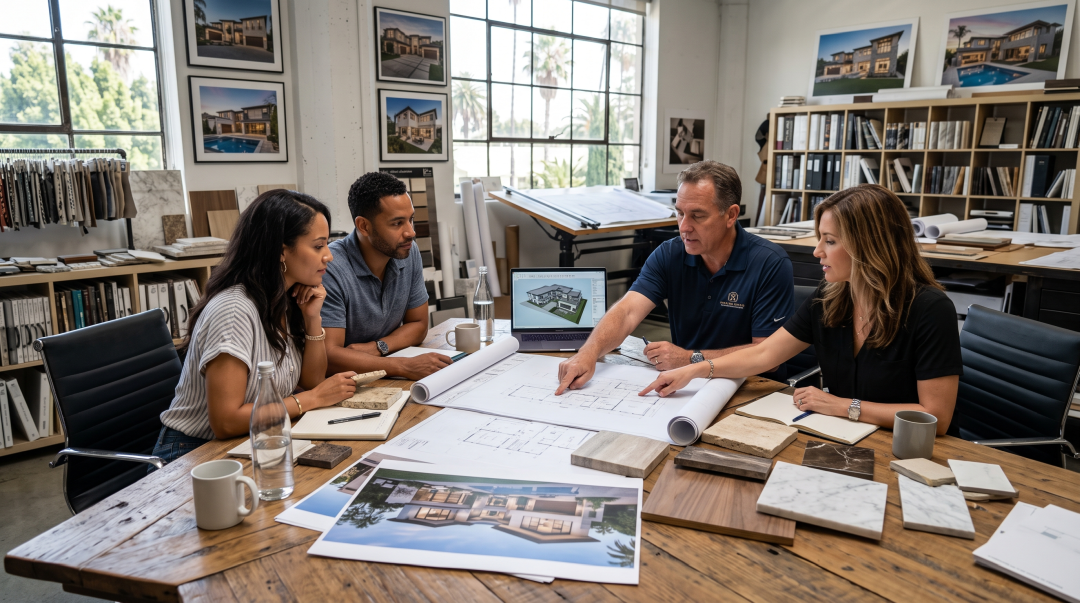
Ask who handles submissions, full plan check, permit corrections, inspections, and subcontractor coordination with the local building department. For City of Los Angeles projects, review how the Los Angeles Department of Building and Safety runs plan review and permitting.
For projects under Los Angeles County jurisdiction, the County says permits are generally required for new buildings.
Ask for a permit track record on projects like yours: how long from submission to permit issuance, and how many correction rounds it took. A builder with local relationships and steady code compliance will usually have fewer surprises. That still doesn't guarantee faster project timelines on your job, so be wary of anyone who promises it.
Review Comparable Work and Speak With References
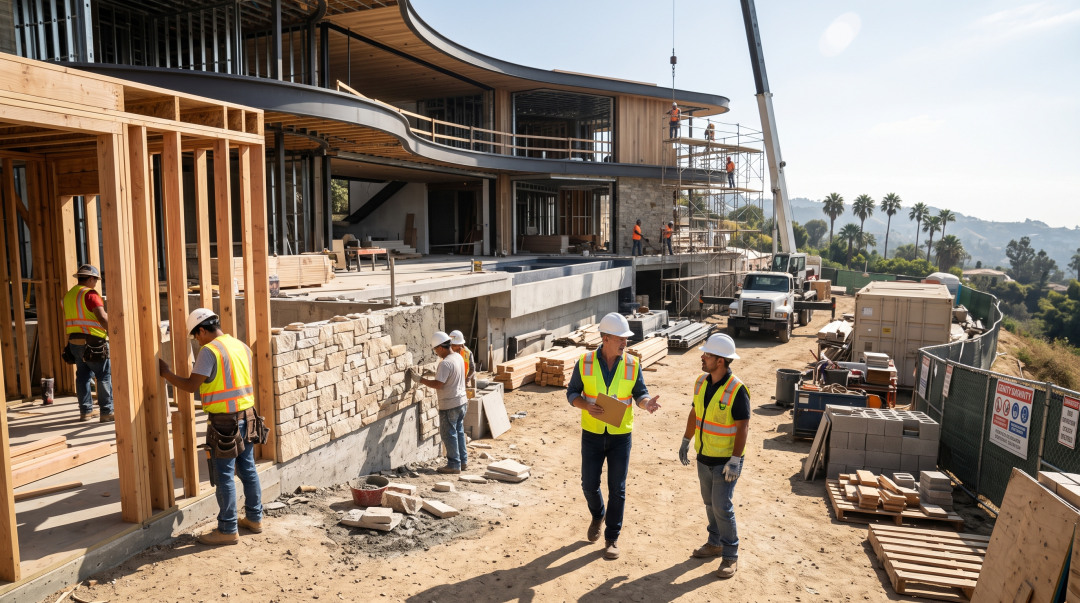
Look for a home close to your size and budget, architectural style, and site complexity. A run of contemporary homes on flat lots says nothing about a hillside foundation or a complex roof line.
Completed custom home projects that resemble yours in scale, materials, budget, and site conditions are the strongest evidence you'll get. They show craftsmanship, coordination, and follow-through better than renderings or a polished portfolio ever will.
So ask to see finished homes. Real finished homes, in person. Then, with permission, walk an active job site. On an active job site you can judge framing, structural quality, detailing, finish consistency, and attention to detail in a way photography can't fake.
Questions for Past Clients
Ask for references from previous clients, then ask them:
- Were regular progress updates useful, or just noise?
- Were problems handled fast, and were decisions written down?
- What changed from the original budget and schedule, and why?
- How did architecture coordination go, and how were finish details like cabinets, tile, and fixtures handled?
- Did any structural or workmanship problems show up after move-in?
Compare Written Bids on an Equal Scope
To compare real bids, follow three steps. First, get at least three written bids based on identical plans, specifications, and scope of work. Second, reconcile the differences line by line. Third, compare the totals.
Itemized estimates make that possible. Review line items, exclusions, allowances, contingency assumptions, subcontractor coverage, schedules, and permit responsibilities. Low allowances for high-end finishes or missing site work can make a cheap bid look great on paper and turn into cost overruns halfway through the build. Written bids that skip those details aren't real bids yet.
Some builders lead with a 26-point audit or a branded checklist. Fine. Ask what's actually on it and whether any of it ends up in the contract.
Choose the Right Pricing Structure
A fixed price agreement sets a price for defined work, subject to contractual adjustments. Cost plus reimburses allowable costs plus an agreed fee. Open books arrangements let you see the actual invoices from subcontractors and material suppliers.
Ask every builder: how do you price and approve change orders? Then require written approval of the cost and schedule impact before any extra work starts.
Evaluate Communication and Project Management
Ask for a single point of contact. Then ask, "Who runs my site each day?" Confirm how often you'll meet, what the progress reports look like, the deadlines for your decisions, and who you escalate to when something goes sideways.
Good project management heads off missed deadlines, budget drift, and avoidable procurement or trade-coordination problems. Trade association membership alone doesn't prove any of that.
Ask whether the builder uses its own crews, subcontractors, or a mix. How are subcontractors selected, scheduled, supervised, and paid? Do the same trade partners work with them job after job? And who documents responsibility when a subcontractor's work hits the schedule or budget?
Ask the Questions That Reveal Process
Start simple: how often will I hear from you? Who coordinates the architects and the engineering team? Ask them to walk you through the change order process, and ask for a sample schedule and contract so you can see what you'd actually sign.
Talk through long-lead fixtures, high-end finishes, subcontractor scheduling, inspections, and what happens after each correction round. Many builders quote 12 to 18 months of construction for a typical custom home in LA, and design and permits come on top of that. Whatever number you hear, a credible schedule shows dependencies and owner decisions. It doesn't just promise a finish date and ignore delays and surprises.
Read the Contract Before Signing
Review scope, drawings, specifications, allowances, payment schedules, milestones, warranty terms, dispute resolution, and termination terms. You want a payment schedule tied to project milestones, with payments released at finished stages of work. Not vague calendar dates. Not a giant upfront check.
Ask whether completion and payment bonds are required. A contractor license bond does a different job. On a contract this size, have a qualified California construction attorney review it. Clear language now is a lot cheaper than legal and warranty disputes later.
Red Flags to Watch For
Vague pricing. Missing exclusions. Bids that come in way under everyone else. Pressure to sign today, cash-only demands, no references, or a builder who won't put commitments in writing.
An unclear change order process or a refusal to show insurance documents is a serious problem. If you suspect misconduct, contact the CSLB or the appropriate consumer protection agency or consumer fraud unit.
Make a Confident Final Selection
Pick the strongest mix of proven Los Angeles experience, verifiable credentials, transparent scope, realistic pricing, and clear communication. Neither the lowest bid nor the prettiest portfolio should make the call for you.
Before you sign, run your finalists through the same checklist: comparable completed homes, documented responsibilities, realistic allowances, and a workable schedule. Settle open questions about fixtures, finishes, site conditions, and exclusions now, while changes are still cheap.
Keep the final proposal, supporting documents, and signed agreement in one place. Your active search process should end with a builder who can explain how the project will be managed, what's still uncertain, and how decisions that affect cost or time get approved. If you want more on vetting, see PHB's guide to what to look for when hiring a general contractor in Los Angeles.
Frequently asked
Keep reading
All storiesOpen-concept, reconsidered: when walls are worth keeping
Knocking down every wall is not always the answer. A designer’s case for keeping a few.
Sunroom and Patio Enclosure Additions in Los Angeles
Planning a sunroom or patio room addition in LA? First decide whether you’re building a covered outdoor room or a conditioned space, because that choice sets the glass, the cost, and the permit. Here’s what to sort out before you sign.
Where to Find ADU Home Builders in Los Angeles
Where do you actually find a good ADU builder in Los Angeles? Start with public records, not ads. Here are six builders worth calling first, the seven places to find more, what LA's 2026 permit data shows, and the exact checks to run before you sign anything.
Get a fixed-price estimate for your remodel.
One team for design and build, one schedule, one price. Free consultation across greater Los Angeles.